
#51: Summer Reading
Some books that I’m excited to read and some books that I want everyone to read.

Garrett Graff recently posted some recommendations for summer reading that I enjoyed a lot and following in his example, I’m posting some of mine as well.
First, here is my current TBR stack.
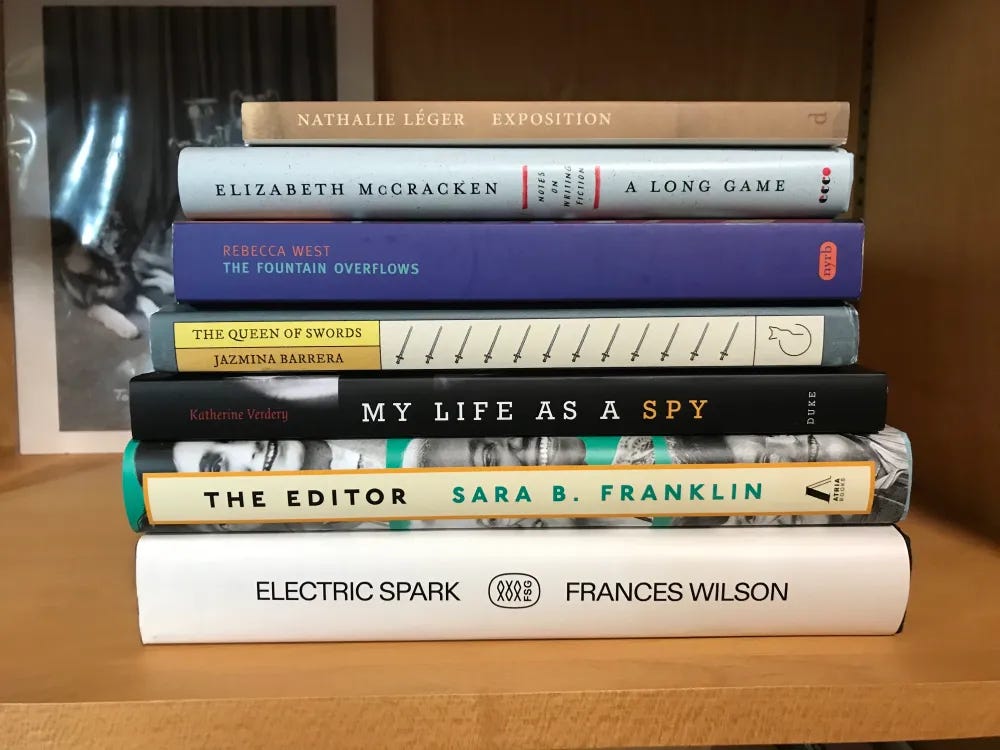
I’ve been trying to read more about women I know little (or nothing) about in the past year or so and all of these books fit in that category. Nathalie Léger really impressed me with her fiction/biography A Suite for Barbara Loden and so I’m reaching back to her earlier titles now. Elizabeth McCracken’s short book on writing, A Long Game, has been recommended everywhere - how could I resist? I read The Fountain Overflows a very long time ago and want to revisit it now in a quest to read Rebecca West more deeply. While a novel, it is heavily based on her life. The Queen of Swords was a total impulse buy while bookstore browsing. It’s a gorgeous edition and Elena Garro sounds fascinating - I didn’t hesitate to purchase after reading the first few paragraphs.
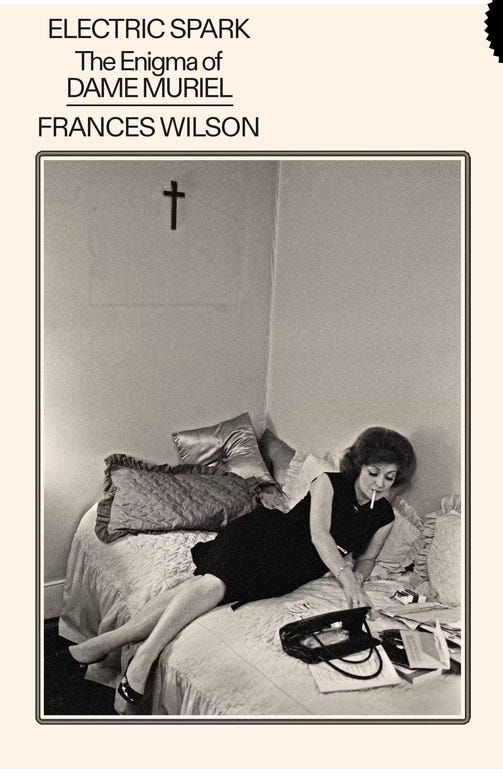
My Life as a Spy is not quite as the title suggests - Katherine Verdery was not a spy but the Romanian government thought she was and created a large secret file on her travels there. Again, couldn’t resist it. And The Editor - on Judith Jones who famously edited Julia Child among many others - and Electric Spark - a bio of Muriel Spark - both are catnip to me. They will be sheer joy to consume as the nights get hotter. I have to show you the cover of Electric Spark - I love this photo!
Some of you may not know that I am also a book reviewer, both for Locus magazine where I read science fiction and fantasy and for the American Library Association’s Booklist, where I review adult nonfiction. Here are some recs from my review reading for those publications:
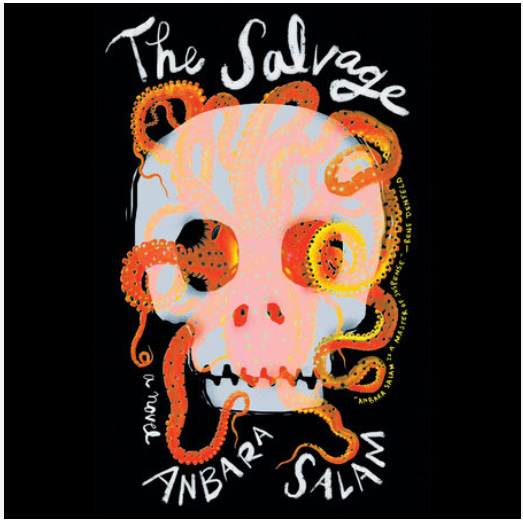
The Salvage by Anbara Salam. Set during Britain’s brutal winter of 1962, this novel follows marine archaeologist Marta Khoury who travels to the island of Cainroch off the coast of Scotland to dive on a famous Victorian era shipwreck that has been dragged down from the Arctic. It was part of a doomed expedition whose leader has been declared a local hero with his grave and ship artifacts now to be the center of a new museum. Welp, Marta starts seeing some…ghosts, everyone becomes paranoid as the Cuban Missile Crisis terrifies the world, the winter cuts the island off the mainland, things get stolen from the wreck, the islanders close ranks and isolate Marta whose own paranoia kicks up a notch and it is gloriously creepy while also populated by a lot of quirky people and, as it’s so cold, will certainly cool you off while reading. Marta is just awesome and reading about her professional fears and frustrations, and slow burn love for islander Elsie, was a lot of fun.
The Jellyfish Problem by Tessa Yang. Another female biologist, Jo Ness, heads off to an island this time off the coast of Maine because an old friend/flame says there is a jellyfish she has got to see. Jo is haunted by another friend who died recently in a cave dive and begins to suspect he might be trying to warn her about her new situation as the islanders closes ranks and set out to kill the jellyfish which could be an incredible hitherto unknown creature from the deep that is possibly, maybe, going to kill them all. (Or drive them crazy.) Science! Confused past love issues! Ghost (maybe)! NO ONE CAN GET OFF THE ISLAND! Yep, it’s awesome.
Switching gears (massively), Ann Boleyn is having quite the literary year in 2026 with The Beheading Game by Rebecca Lehmann and Henry Tudor Must Die by Jillian Laine. In both cases Ann is not beheaded but survives without anyone knowing (magic involved) and then sets out on a mission of revenge against her murderous husband. Both authors did outstanding research, they both make the time period come alive and they both, clearly, love Ann. The Beheading Game focuses more on her alone while Henry Tudor Must Die includes nearly all of Henry’s other wives. While both are written for adults, if you have teens who are the slightest bit interested in English Royal history (or loved the musical Six), then these are must reads.
Now, for nonfiction!
Garrett blurbed This Vast Enterprise by Craig Fehrman, and writes about it again in his newsletter, and I reviewed it for Booklist. This revisit of the Lewis & Clark Expedition, which includes insights from multiple other members of the Corps of Discovery, is one of the best history books I have read in ages. I can not recommend it enough and Fehrman’s research, which he dicusses in two outstanding bibliographic essays, is stellar. Whatever you think you know about this part of American history, you do not know enough. Please read it - you won’t be disappointed.
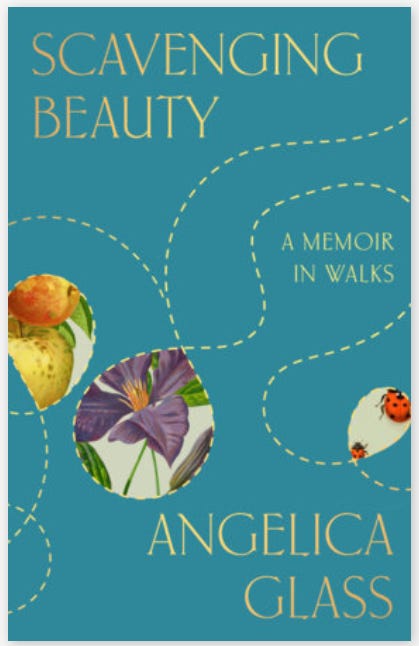
Scavenging Beauty by Angelica Glass is a different sort of book about a woman on a walking “adventure”. (This is not about conquering a mountain, trail or anything else to prove yourself.) Glass sought to walk every road in Santa Cruz county as a way to exercise and know her home better. She ended up doing not only that but revisiting a terrible childhood and coming to terms with her great love for her siblings and herself. If you are of a certain age and ready for reflection, plus great commentary on Santa Cruz, CA! - this is sublime. I could not put it down; Glass is a great writer.
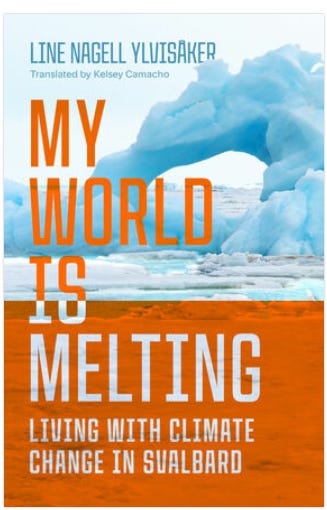
My World is Melting by Line Nagell Ylvisåker. This is a hybrid memoir that not only tells the story of Line’s life in Svalbard but also touches on climate change, the cruise ship industry, the Svalbard Global Seed Vault and more. It’s a slender book - less than 200 pages, but quite evocative. This is the first English translation and I’ve thought about it a lot since reviewing this spring. It’s the sort of elegant and important writing we need more of and a great example of a book deserving of more attention.
I also intend to read Patrick Radden Keefe’s latest, London Falling, as he is one of my “must buy” authors. I don’t think anyone is doing narrative nonfiction like he is right now. HIs books, no matter the size, are engrossing and how he manages to make melding so much research into novel-like narratives look easy, I’ll never know.
Pamela Colloff, who is an excellent true crime author, has her debut out now: Catch the Devil. I never miss her magazine articles and I’m sure this book, about a conman who conned the criminal justice system, is a don’t miss. Here’s an interview with Colloff on the the subject of her book.
And yes, I’m also reading Collision Course by Joseph McCartin, an older book on the 1981 air traffic controllers strike, because how everything went so wrong then, and how ATC is still such a problem for the FAA now, is something I find both endlessly fascinating and frustrating. Here’s an interview with the author back in 2011 on NPR.
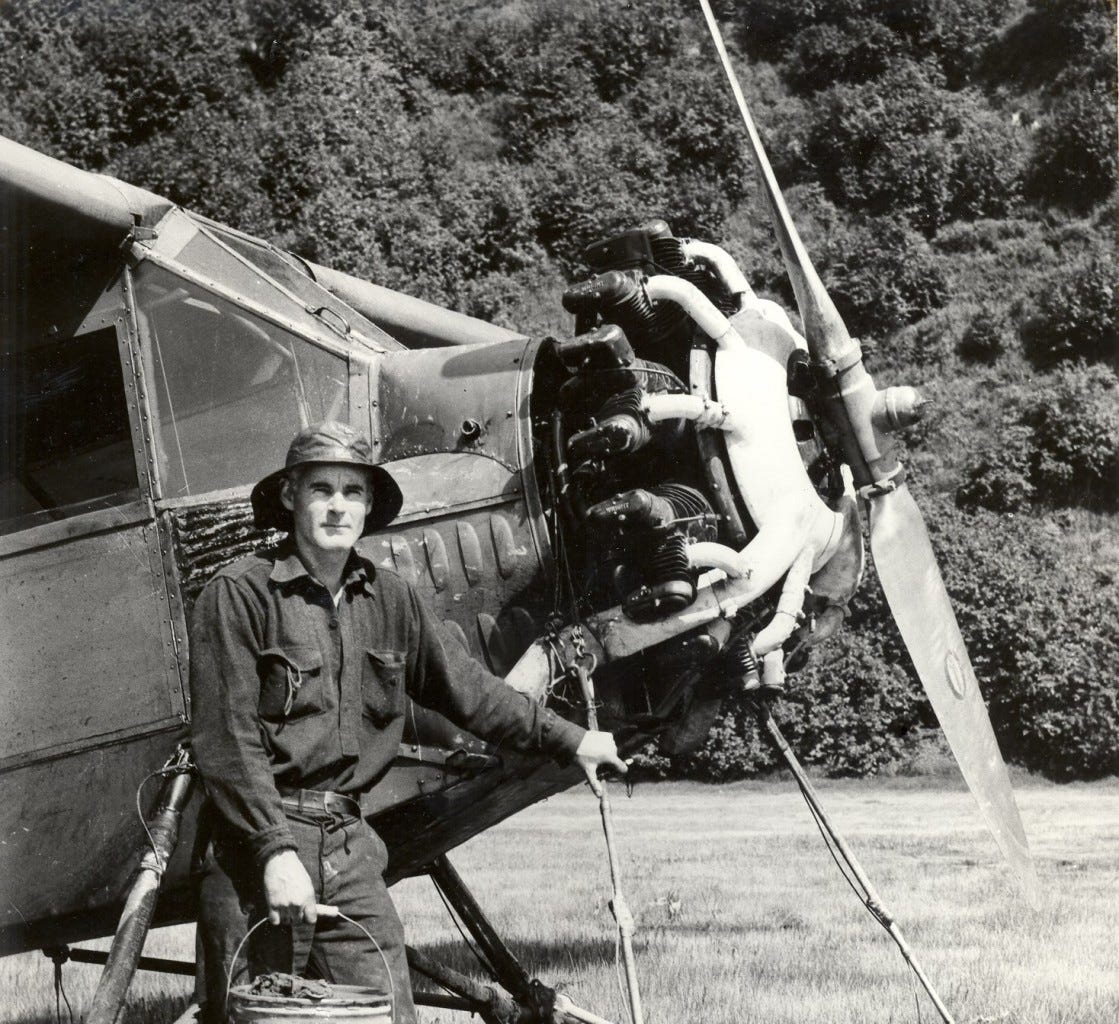
I hope you are reading some lovely books this summer and keeping cool. I plan to celebrate the 4th of July by prepping a large list of FOIA requests for many government agencies including, of course, the FAA. In the meantime, here’s a great American doing something awesome. Bob Reeve not only pioneered many air routes in Alaska, he was critical to the protection of the Aleutian Islands during World War II. We all wish we could be as cool as Bob Reeve. :)
Was working for the Anchorage Times as a photographer when an inbound aircraft declared an emergency with landing gear problems. It was pretty exciting.
https://photos.tonykranz.com/History/Anchorage-Times-1983/i-pmD56vD
Reeve Aleutian Airway!